- Key Takeaways
- The Role of Backlinks in Modern SEO
- How to Carry Out a Successful Backlink Analysis
- How Is a Backlink Analysis Carried Out? Here Is a Step-by-Step Approach:
- Which Backlink Analysis Tools Really Help
- Deriving Specific Actions from Your Backlink Analysis
- Sounds Too Complicated? Then Ask the Experts!
- Backlink Analysis as the Basis for Sustainable SEO Success
- FAQs
Why Strong Backlinks Determine Your Ranking. A good backlink analysis shows you which links are helping your website, which may be holding it back, and which could even be harmful. Backlinks remain one of the most important signals for authority, trust and visibility on Google.
When you analyse your link profile, you can identify strong domains, risky patterns and, above all, untapped potential. Simply collecting links, however, is no longer enough.
What matters are quality, relevance, anchor texts and the development of your links, as search engines now assess backlinks in a far more nuanced way than they did just a few years ago. A single strong link can achieve more than a hundred weak ones.
In this article, you will learn how to check backlinks, which metrics really matter and how to use your backlink analysis to make better SEO decisions.
Key Takeaways
- A thorough backlink analysis shows you which links strengthen your ranking and which ones pose risks.
- Quality beats quantity: strong domains, topical relevance and clean anchor texts determine the SEO impact.
- By carrying out a backlink analysis regularly, you can identify negative developments early and protect yourself against potential penalties.
- Modern backlink analysis tools provide data on authority, traffic and link growth, helping you evaluate your links more effectively.
- Successful backlink analyses always lead to specific actions in link building and the optimisation of existing links.
The Role of Backlinks in Modern SEO
A single bad backlink can push you several pages down the rankings.
Backlinks remain one of the strongest ranking factors. Search engines such as Google use them to assess the relevance and authority of a website. Each link acts like a recommendation. The more trustworthy the source, the stronger its effect on your ranking.
Why Backlinks Build Trust
Search engines analyse which websites link to you and the context in which this happens. A link from an established domain with high authority signals quality. At the same time, topical relevance and organic placement play an important role.
That is why simply collecting lots of links is not enough. You need to make sure your links come from relevant and credible sources.
How Important Is Backlink Analysis for SEO?
It is essential. Without regular analysis, you lose track of your link profile. You will not be able to identify harmful links or new opportunities.
A clean backlink analysis helps you to:
- identify risky or even toxic links early on
- expand successful link sources
- better understand your competitors
- manage your strategy based on data

If you want to check your backlinks, you need clear criteria and reliable data. And that is exactly what the next section is about.
How to Carry Out a Successful Backlink Analysis
For a successful backlink analysis, you need practical criteria, the right data and a structured approach. This is the only way to identify which links strengthen your ranking and where you need to take action.
The Most Important Metrics at a Glance
When carrying out an analysis of your backlinks, you should focus primarily on the key metrics. These include:
- Domain and URL authority of the linking page (2)(3)
- Organic traffic of the link source (4)
- Topical relevance to your own website (1)
- Anchor texts and their distribution (5)
- Ratio of follow to nofollow links

These factors quickly show you whether a backlink provides real added value or is more likely to weaken your profile.
How Is a Backlink Analysis Carried Out? Here Is a Step-by-Step Approach:
First, you collect all existing backlinks using a backlink analysis tool. Once you enter your URL, the tool will, of course, do this automatically.
You then evaluate each domain based on the most important metrics. You can usually filter and sort the lists by domain authority or other criteria, making it easier to find your way around. Pay particular attention to noticeable patterns, such as lots of links from irrelevant or weak sources.
In the next step, you identify risks. These include spam links (which, for example, are flagged accordingly in Ahrefs, as shown in the screenshot on the right), unnatural anchor texts or noticeable spikes in links.
You then derive specific actions, such as removing harmful links or deliberately building new links. You can see exactly how this works further down in this article.
Which Backlink Analysis Tools Really Help
Without the right data, every analysis remains incomplete. Good backlink analysis tools give you detailed insights into your link profile and save a huge amount of time. The best-known tools include:


Optimising Anchor Texts and Link Structure
In addition to the links themselves, their design also plays an important role. Check your anchor texts for naturalness and variety. Too many identical keywords look unnatural and can have a negative effect. Also pay attention to clean internal linking. It supports the impact of your external backlinks and specifically strengthens important pages.
Sounds Too Complicated? Then Ask the Experts!
A thorough analysis of backlinks takes a lot of time and experience, and also requires the right tools. Many people underestimate how complex it is to assess a link profile correctly and derive the appropriate actions from it.
You can make things easier for yourself. With a specialised backlink marketplace, you get direct access to high-quality websites and can manage your link building in a targeted way. Instead of relying on vague packages, you choose exactly the domains that match your niche, language and strategy.
More Control and Better Decisions
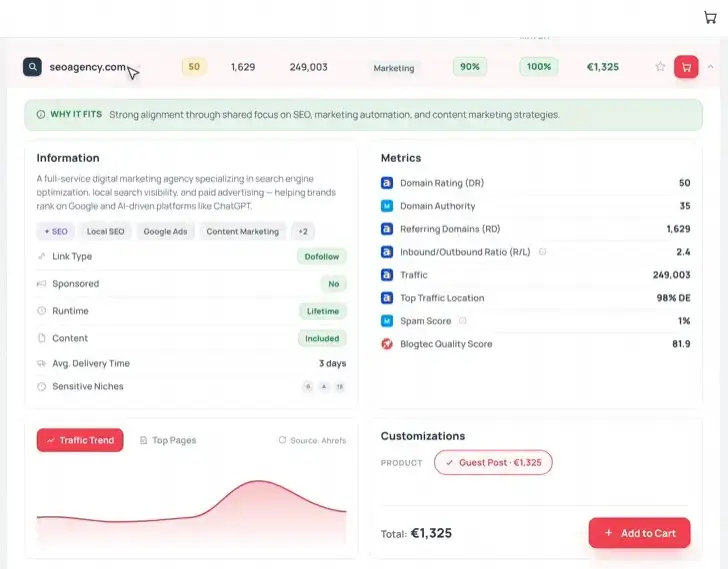
A data-driven approach makes all the difference. You filter websites according to your criteria, such as domain authority, traffic or topical relevance, and then make your decision.
With more than 10,000 available websites, Blogtec’s modern backlink marketplace allows you to expand your link profile in a targeted way. You always retain a clear overview of your booked links and their performance.
Transparency and Best Price Guarantee
A good marketplace is built on transparent prices and clearly understandable services. At Blogtec, you can see exactly what each individual backlink costs. And if you find a domain cheaper elsewhere, Blogtec will undercut that price by another 5%. This way, you always get the best price.
You can register for free here and find suitable backlinks.
Or would you rather book a call directly and get even more out of your website?
Backlink Analysis as the Basis for Sustainable SEO Success
A thorough backlink analysis shows you where your website currently stands and which steps make sense next. You identify strong links, spot risks and make targeted use of new potential.
If you regularly check backlinks and optimise your profile, you will make far better decisions and also build long-term authority. And that is exactly what ultimately determines stable rankings and sustainable traffic.
But always remember: a good backlink analysis is not a one-off step, but a continuous process that secures your SEO success in the long term.
FAQs
Backlink analysis is one of the most effective tasks in SEO. Without regular analysis, you lose track of your link profile and identify risks or opportunities too late.
You should definitely check your backlinks regularly, ideally once a month. For larger websites or active link-building campaigns, even more frequent checks are recommended so you can respond quickly to changes.
A good link profile consists of thematically relevant, high-quality and naturally acquired backlinks. A balanced distribution of anchor texts and steady growth are also important factors.