
A backlink audit shows you whether your website is benefiting from strong recommendations or being held back by poor-quality links.
Many websites accumulate backlinks over time in an uncontrolled way. These often include valuable links, but also risky or toxic ones. Without a regular audit, you will not notice this and risk the long-term ranking of your posts or keywords.
In a professional SEO backlink audit, you analyse your entire link profile, assess each individual link and derive specific actions from the results. This helps you secure the sustainable visibility and stable ranking of your content.
Below, we show you how to carry out a backlink audit, which tools you need and how to improve your link profile in a targeted way.
Key Takeaways
- A backlink audit helps you clearly distinguish between harmful and high-quality links and take targeted action.
- A regular SEO backlink audit protects your website from penalties and secures long-term rankings.
- You should assess all backlinks and categorise them as trustworthy, suspicious or toxic.
- Tools provide important data, but the final assessment always comes down to your own analysis and experience.
- A successful audit leads to very specific actions, such as link removal, disavowal or targeted link building.
No Backlinks, No SEO: Why Backlinks Are So Important for SEO
Backlinks are among the most important signals Google uses to assess the trust and relevance of your website and content. When a strong, thematically relevant website links to your page, it acts like a recommendation. The more credible this recommendation is, the more it can strengthen your visibility.
Good Links Strengthen Your Authority
A high-quality backlink comes from a website that is trusted, has real traffic and is thematically relevant to your offering. Links like these help Google to better understand and classify your content.
That is why the sheer number of backlinks is by no means what matters here. What counts are quality, context, placement and naturalness. A link from a relevant expert article is worth significantly more than lots of weak links from random directories.
Poor-Quality Links Can Put Your Ranking at Risk
A problematic link profile usually develops over a longer period of time. Old SEO measures, spam links, low-quality directories or purchased links without quality checks can harm your website.
A backlink audit shows you which links strengthen your trust and which ones you should review critically. This prevents poor signals from slowing down your SEO performance in the long term.
When You Need a Backlink Audit
An audit is particularly worthwhile if your rankings suddenly drop, you take over a website or you want to actively build links. You should also understand your starting point before launching larger SEO campaigns.
If you want to check backlinks regularly, you can identify changes early. This allows you to respond more quickly to harmful links and make more targeted use of new opportunities.
How a Backlink Audit Works
Take enough time for a backlink audit, especially the first time. If you work in a structured way, however, you will quickly identify which links strengthen your ranking and where you need to take action.
1. Collect Backlink Data
The first step is data collection. You need as complete an overview of all backlinks as possible. The best approach is to use several backlink analysis tools and combine the data, as every tool has its own strengths and weaknesses.
Typical sources include:
- Google Search Console
- Tools such as Ahrefs, SEMrush or Sistrix
The more data you combine, the more accurate your SEO backlink audit will be in the end. It is important that you record all relevant metrics, such as domain, anchor text, authority of the linking page and topical classification.
Depending on the depth of your audit, the following metrics may also be useful:
Outgoing Links:
Show you how many external pages a domain links to.
Ratio of Ingoing to Outgoing Links:
Helps you assess whether a website has grown naturally or is primarily used for selling links.
Organic Traffic:
Provides insight into whether the domain actually gains visitors via search engines.
Top 3 Keywords:
Show which topics the website is visible for and whether it is thematically relevant to your project.
These values help you assess the quality of a website more realistically. This allows you to identify more quickly whether a domain has genuine rankings and organic traffic or merely looks good on paper in terms of SEO metrics.
The best way to do this is to use an Excel file or Google Sheets. We make it especially easy for you and have created a template that you are welcome to use free of charge.
2. Assess and Classify Backlinks
In the next step, you analyse each individual link. You divide your backlinks into three categories:
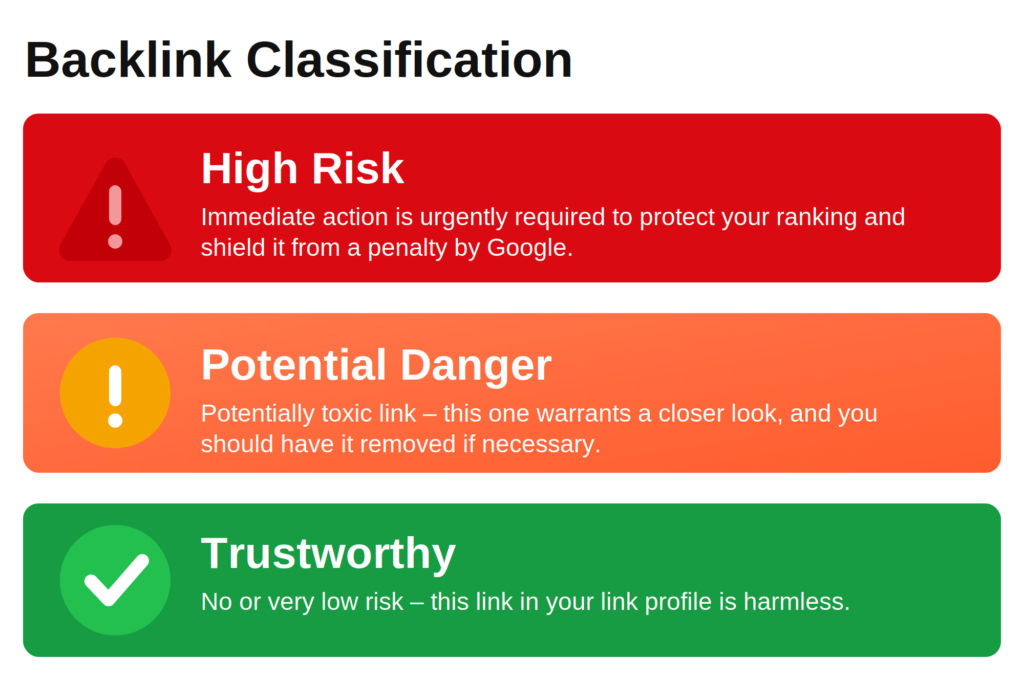
- Trustworthy: strong, relevant and natural links
- Potential Risk/Suspicious: noticeable or unclear sources
- High Risk/Toxic: harmful, spam-like or manipulative links
This classification is very important, as it forms the basis for all further actions. Tools give you initial assessments, but the final evaluation is always made by you based on your own analysis.
3. Identify Harmful Links
A central part of every audit is identifying risky backlinks. These include:
- Links from spam websites
- Unnatural anchor texts
- Links from irrelevant subject areas
- Suspicious link patterns or sudden peaks
If you check your backlinks regularly, you can identify these problems early and respond quickly before they affect your ranking.
4. Derive and Implement Actions
After the analysis comes the most important step: implementation. Carrying out a backlink audit always means taking concrete action afterwards. This includes:
- Removing harmful links by making contact
- Using Google’s Disavow Tool
- Building new, high-quality backlinks
- Optimising your anchor texts
Only if you take active action will your link profile improve sustainably.
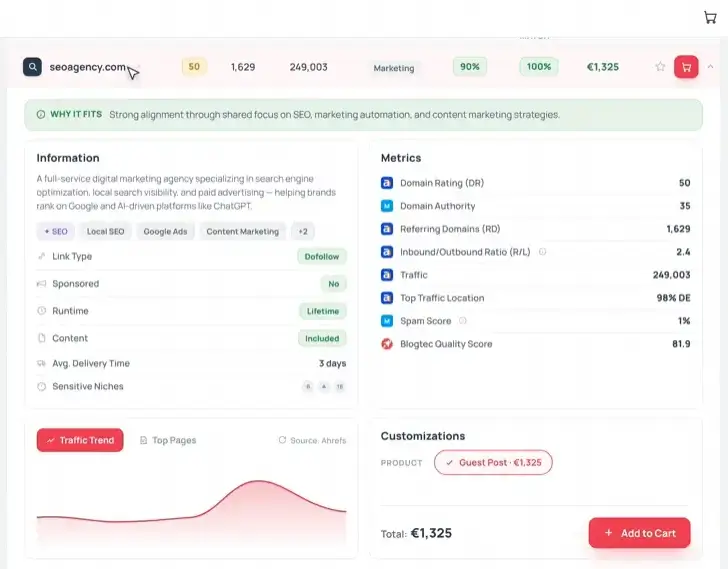
You have the simple option of finding and using new backlinks directly in the Blogtec Link Center.
Backlink Audits by Experts
A backlink audit requires experience, a lot of time and a good understanding of the wider context. Tools can provide you with the basic data, but they are no substitute for a well-founded assessment.
Why Professional Support Is Worthwhile
An experienced SEO expert can identify patterns that tools usually only capture inadequately. These include unnatural link structures, risky networks or hidden quality issues. Especially for larger websites or sensitive industries, an SEO backlink audit carried out by an expert is significantly more precise than attempting it yourself.
You also save time. Instead of working your way through thousands of backlinks, you receive a professional assessment and very specific recommendations for action.
Implementation and Strategy
With a professional service, you do not just receive a simple list of problematic links, but also support with implementation:
- Identification and prioritisation of toxic links
- Support with the disavow process
- Development of a sustainable link-building strategy
- Continuous monitoring of your link profile
This ensures in the long term that your backlink audit actually has an impact and does not remain just a snapshot.
Build Backlinks Strategically Instead of Guessing
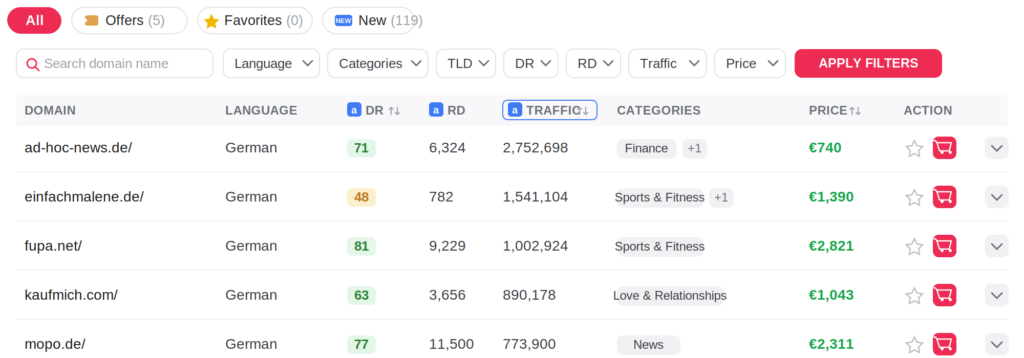
In addition to clean-up, building high-quality links is a particularly important measure. This is where a structured backlink marketplace offers clear advantages. In the Blogtec Link Center, you can access more than 10,000 verified websites and filter them by criteria such as language, niche, domain strength and traffic. This allows you to make well-founded decisions and build authority in a targeted way.
Always the Best Prices
Blogtec guarantees you a price that is 5% cheaper than any existing offer for the same backlink. If you find a lower price elsewhere, simply send it to Blogtec and you will be charged 5% less accordingly.
Register for free now and find suitable backlinks.
Or book a call directly and discover individual potential.
Backlink Audits Are Essential for Clean Rankings
A backlink audit is one of the most important tasks in SEO. You identify risks early, protect your website from penalties, and build authority in a targeted way.
With a convincing process, the right tools and a well-thought-out strategy, you can continuously develop your link profile in this way. If you also rely on experts, you save time and avoid typical mistakes.
Ultimately, carrying out a backlink audit is not a one-off step, but an integral part of your SEO strategy.
FAQs
A backlink audit is a systematic analysis of all incoming links to your website. You assess quality, relevance and potential risks in order to optimise your link profile and improve your SEO performance.
You should carry out an SEO backlink audit at least once per quarter. If you are actively building links or experiencing significant ranking changes, monthly checks are even recommended.
The best-known tools include Ahrefs, SEMrush and Sistrix. They provide you with important data for analysing and assessing your backlinks.
Toxic backlinks come from low-quality, spammy or irrelevant websites. They can harm your domain and, in the worst case, lead to ranking losses.
You can contact website owners and ask them to remove the links. Alternatively, you can use Google’s Disavow Tool to devalue problematic links.